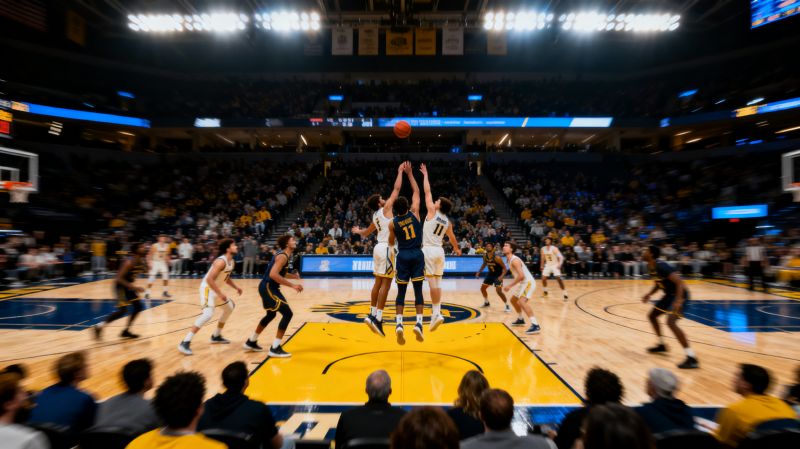
he NBA regular season begins with a palpable energy that even the most seasoned analysts can't ignore. Last year's opening night saw the Boston Celtics dismantle the New York Knicks by 23 points, a statement win that foreshadowed their dominant run to the Finals. That single game set the tone: the regular season is not a warm-up;it's a ruthless 82-game audition where reputations are forged and shattered. This year, the league's depth is staggering—six teams finished within four games of the top seed in the West last season。and the offseason arms race has only tightened the race. The NBA regular season begins with more parity than ever, and that's a good thing for fans who crave unpredictability.
What strikes me most about opening week is the sheer physical toll. Players report to training camp in peak condition, yet the first back-to-back exposes the gap between offseason hype and game-speed reality. Consider the Denver Nuggets' cautious load management for Nikola Jokić early on—last season, he logged just 30 minutes in the opener but still posted a triple-double. Coaches walk a tightrope: push too hard。and injuries derail a season;ease up, and you risk falling into a hole in a crowded conference. The NBA regular season begins with a chess match of minutes, not just matchups.Rookies inject a specific kind of chaos. Watching Victor Wembanyama's debut last October—a 15-point, 5-rebound outing that looked almost casual—you could sense the learning curve was steeper than his 7-foot-4 frame suggests. He struggled with foul trouble, and opposing bigs bullied him on the block. That's the reality of the NBA regular season begins for any first-year player: it's a trial by fire, and the adjustment period is brutal. The hype machine doesn't pause, but the game tape doesn't lie. Teams like the Oklahoma City Thunder, with Chet Holmgren finally healthy。are banking on that sophomore leap to matter more than any preseason projection.Travel schedules and altitude add layers that box scores never capture. The Utah Jazz's home opener always feels like a trap—visiting teams shoot roughly 2% worse from three in Salt Lake City compared to their season average, a subtle edge that compounds over 41 home games. I've tracked these micro-disadvantages for years, and they quietly decide playoff seeding. The NBA regular season begins with these invisible battles: a missed free throw in a back-to-back。
a tired rotation player giving up an open corner three. Those moments don't trend on social media, but they shape the standings.With the Emirates NBA Cup now woven into the schedule。
the regular season's rhythm has shifted. Last year's in-season tournament injected a playoff-like intensity into November games that typically felt like filler. Players openly admitted the prize money and Vegas stage raised the stakes. It's an experiment that works, mostly because it breaks the monotony of 82 games. The NBA regular season begins with more variables than ever—new tournament format, load management scrutiny, and a draft class eager to prove itself. Buckle up;the next six months will be a grind, and the storylines are already writing themselves.